Shackles, Incense, and Dancing

“She loved life and it loved her right back.”

Arranged marriages are a strange and unknown affair for most of us westerners, and though we often think of them as a negative thing, most people here in India don’t. There are of course problems, abuse and marriage for money, but there are many issues in our “love marriages” as well. Usually the father of a young girl wants to find a suitable husband for their daughter, so they try and arrange their marriage with someone with whom a union will be successful. As most Indians say “marriage first, love after.”

Continue Reading…

Reverse Culture Shock

“Travel is more than the seeing of sights; it is a change that goes on, deep and permanent, in the ideas of living.” – Miriam Beard

Reverse culture shock is a very real thing, and a difficult thing to face when, as a traveler, you return home and don’t understand what is happening.

“Just because you are at home doesn’t mean life has to stop being fun. Create new friendships, go on small trips, and embrace every opportunity.
The change in you is permanent. Learn how to deal with the new you back in your old home, and you will begin to see life, even at home, as an adventure.”

Reverse Culture Shock

Zanskar: In the Land Of Frozen Rivers

“Happiness is the meaning and the purpose of life, the whole aim and end of human existence.”

20140611-105035.jpg

Since we were unable to cycle through Zanskar a few weeks ago we decided instead to return with our backpacks in order to experience this completely isolated part of the world. Throughout eight months of the year, the one unpaved road leading onto the valley is snowed in and therefore completely inaccessible. This road was only built in the early 1980’s which reflects how new development and tourism to this area still is. During the winter, the only way out of the region is a long, dangerous, and treacherous trek out on the frozen river, an undertaking some of the children make in order to attend school in different regions. Parts of this valley are considered the coldest yearly inhabited areas in the world, and though there aren’t many left, there are still a few nomadic tribes who live in the area as well. The permanent settlements are still impressive in themselves as they are days away from any road, with passes ranging from 5,000m to 6,000m separating them from the rest of the world. There are also many famous monasteries in the region, literally in the middle of no where, carved into the rocks.

Continue Reading…
Run With The Children: Far Western Nepal Part 4

“Travel is rebellion in its purest form… We follow our hearts. We free ourselves of labels. We lose control willingly. We trade a role for reality. We love the unfamiliar. We trust strangers. We only own what we can carry. We search for better questions, not answers. We truly graduate. We sometimes choose to never come back.”

“I’m running down a narrow path through the trees, leaping from rock to rock in an attempt to follow a young girl with pigtails who is leading the way. Giggling as she runs, she is agile and confident on the small rocky path, scampering down the hillside like a goat. She takes a sharp left turn up what looks like a wall of steep rock and within seconds is perched on the top, waiting for me with a grin. Her cheap plastic sandals don’t stop her. In fact, I don’t think anything could….”

Far Western Nepal Part 4

Tourism Without Destruction

“Gandhi already did Gandhi, Mother Theresa did Mother Theresa so well, and Martin Luther King, he did Martin great! You be you! You be you! You be you! Who else could do you like you anyway.”

Throughout my stay in Asia I have seen the immense impact of tourism throughout India and Nepal. Though foreigners bring money, they also bring a cultural destruction that can never be undone. I have seen farming villages transformed into tourist dependent cities where the inhabitants (especially under the age of thirty) sit around on their phones all day refusing to work. They expect the money to pour in, as it does with an influx of tourism, without any effort on their part. Because of this there has been an immense loss of traditional dress, food, cultural, and even attitude towards life in many of these areas, something that is apparent to us as cyclists as we visit areas that have held their culture as they don’t rely on tourism. Here in Leh, at least in the beautiful guest house I am staying in, I have found (for the first time) a place which has kept its culture even throughout the onrush of tourism.

Continue Reading…

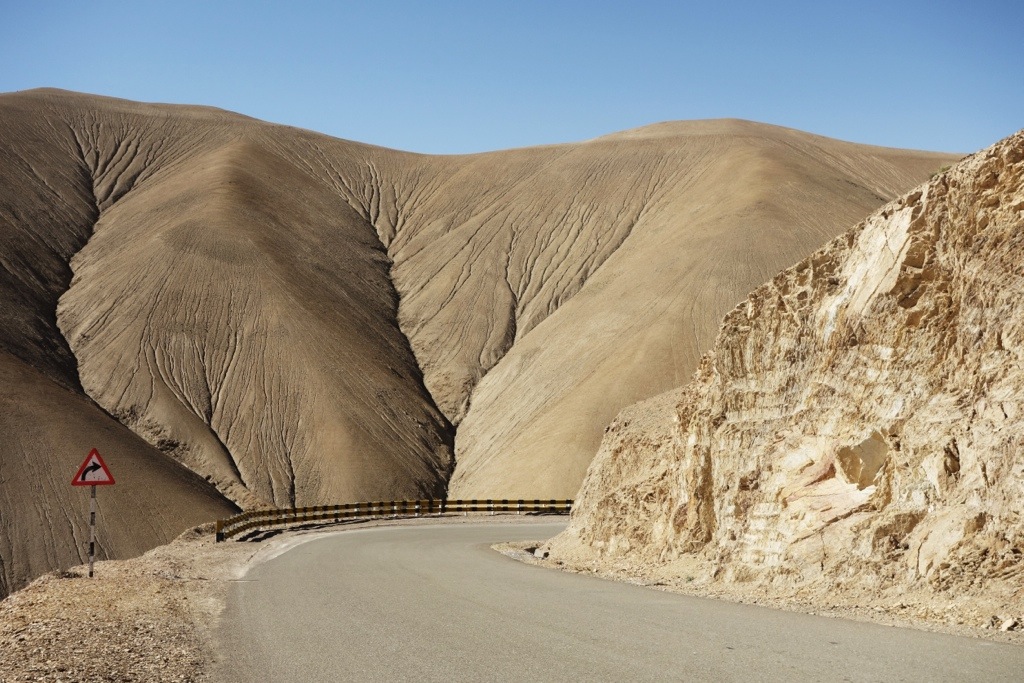
Cycling On The Moon: Ladakh

“If you can’t figure out your purpose, figure out your passion. For your passion will lead you right into your purpose.”

The last few days before Leh proved to be more difficult than we had thought. After completing two passes in a day, we figured we would have an easy two days out, gaining only about 500m of elevation in order to reach Leh, the capital of Ladakh and a pleasant tourist city situated in the mountains. Boy were we wrong! Instead of simply gaining the elevation we needed, we instead climbed another two unofficial passes, gaining and loosing 600m… Twice. And that doesn’t even include the smaller ups and downs which lead us through this high desert terrain. It wasn’t simply the altitude (3,500-4,000m) that was difficult either, it was the extremely intense heat (40c) beating down on us constantly and, as we were really in a desert, there was no shade or water.

Continue Reading…

Ladakh: Hospitality At Its Finest

“Desire! That’s the one secret of every man’s career. Not education. Not being born with hidden talents. Desire.”

20140611-090443.jpg

Just before reaching the pass that would officially bring us into the Zanskar valley we encountered two Indian motorcyclists who had just come from farther ahead. They flagged us down to explain that the pass had been impossible for them to complete as there was no road. Not a bad road, or a washed out road, simply, no road. And on top of that, there was new snowfall (unsurprising as farther below we had experienced over twelve hours straight of rain) and apparently a river (or part of the non road) which would have water up to our waists due to the extensive snow melt. So, after spending one last night surrounded by beautiful mountains over 7,000m, we decided to cycle out and towards Leh in order to return a few weeks later for a twenty day trans Himalayan trek through the Zanskar valley.

Continue Reading…

Give Me, Give Me, Give Me

“Because from childhood I know no human being died because of poverty – everything happens because of ignorance.”

Cycling through Suru valley was wonderful as I mentioned in my last post, but one unfortunate factor, something I have talked about before as it has followed me through India and Nepal, started to ruin it for me.

Continue Reading…

Cycling Through Suru Valley

“What we all want in life is to travel, fall in love, and be happy.”

Halfway between Srinagar and Leh we decided to take a 250km detour down to Padum which is situated in the very cold and isolated Tibetan area of Zanskar Valley. First though, we had to traverse Suru Valley which is a lush green area with high snow covered peaks in the distance. The inhabitants are Tibeto-Dard meaning they are of both Chinese and Pakistani (and Afghani) descent. Though the region use to be Buddhist like its neighbor Zanskar, the inhabitants converted to Islam during the 16th century so mosques and headscarfs were in abundance.

Continue Reading…