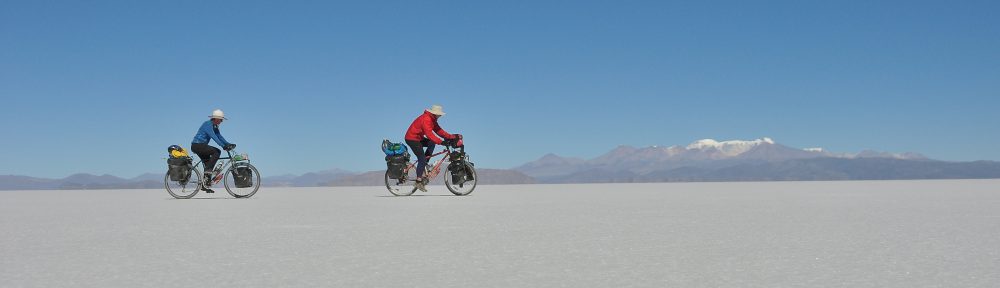
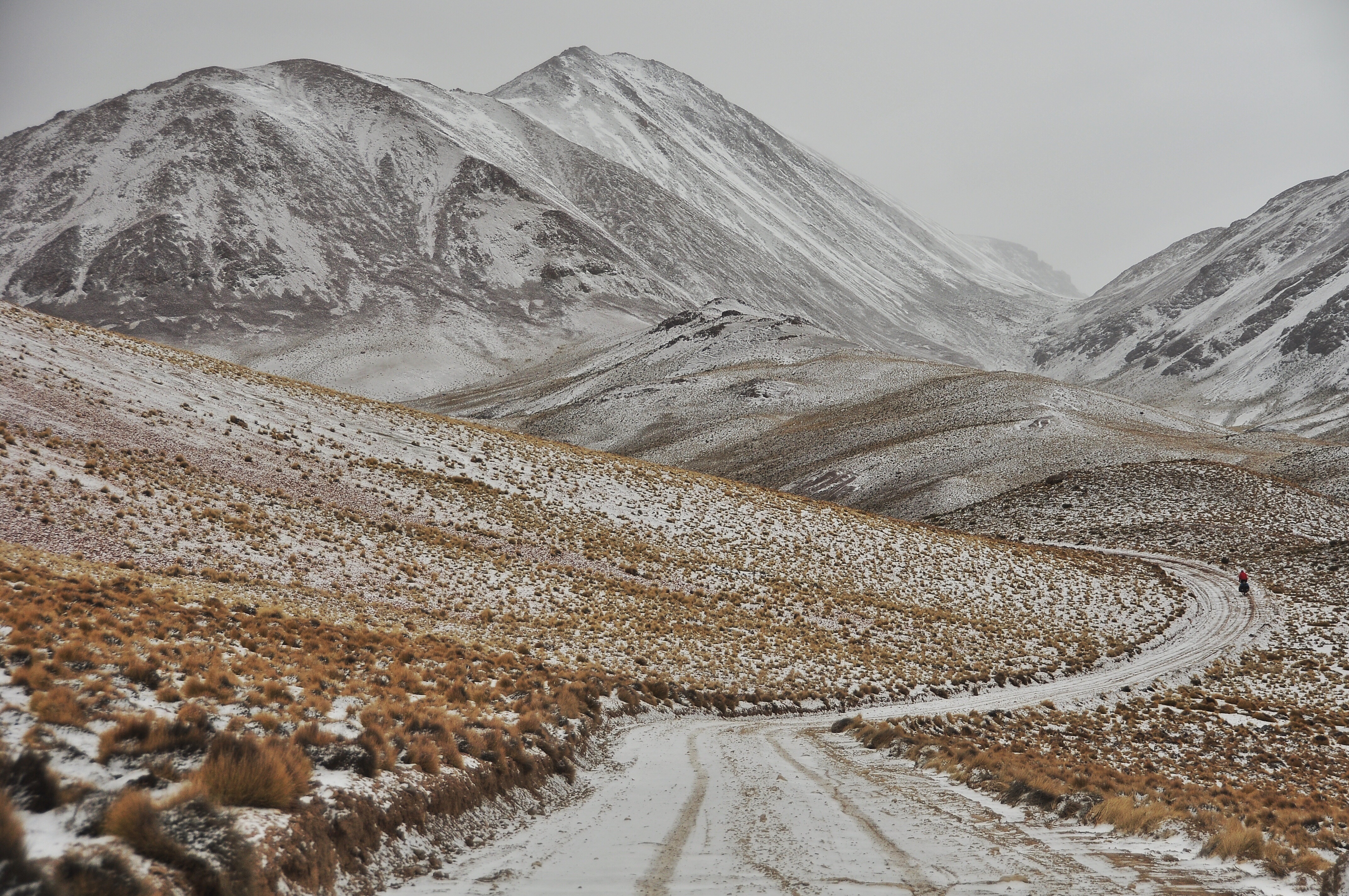
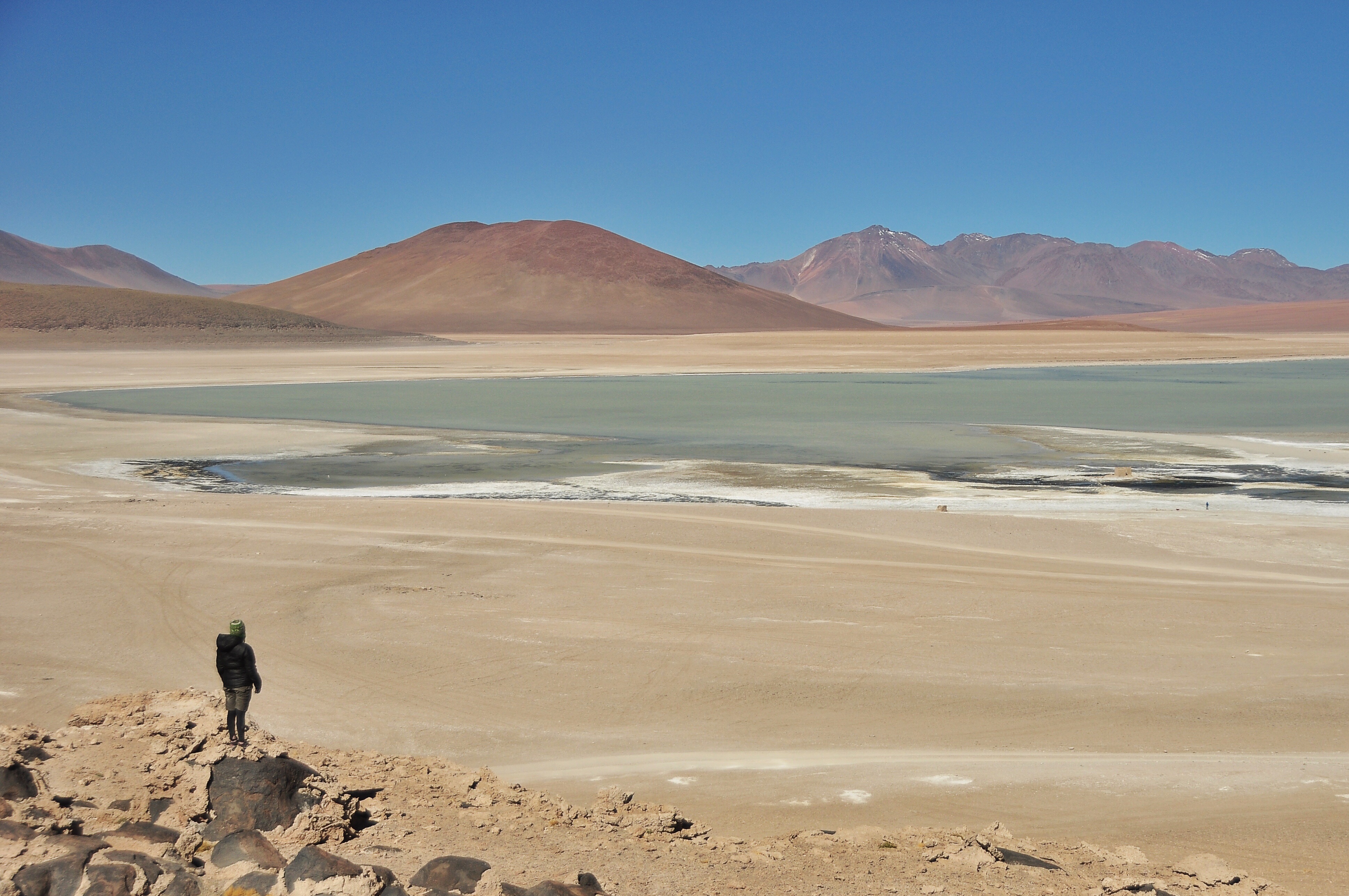
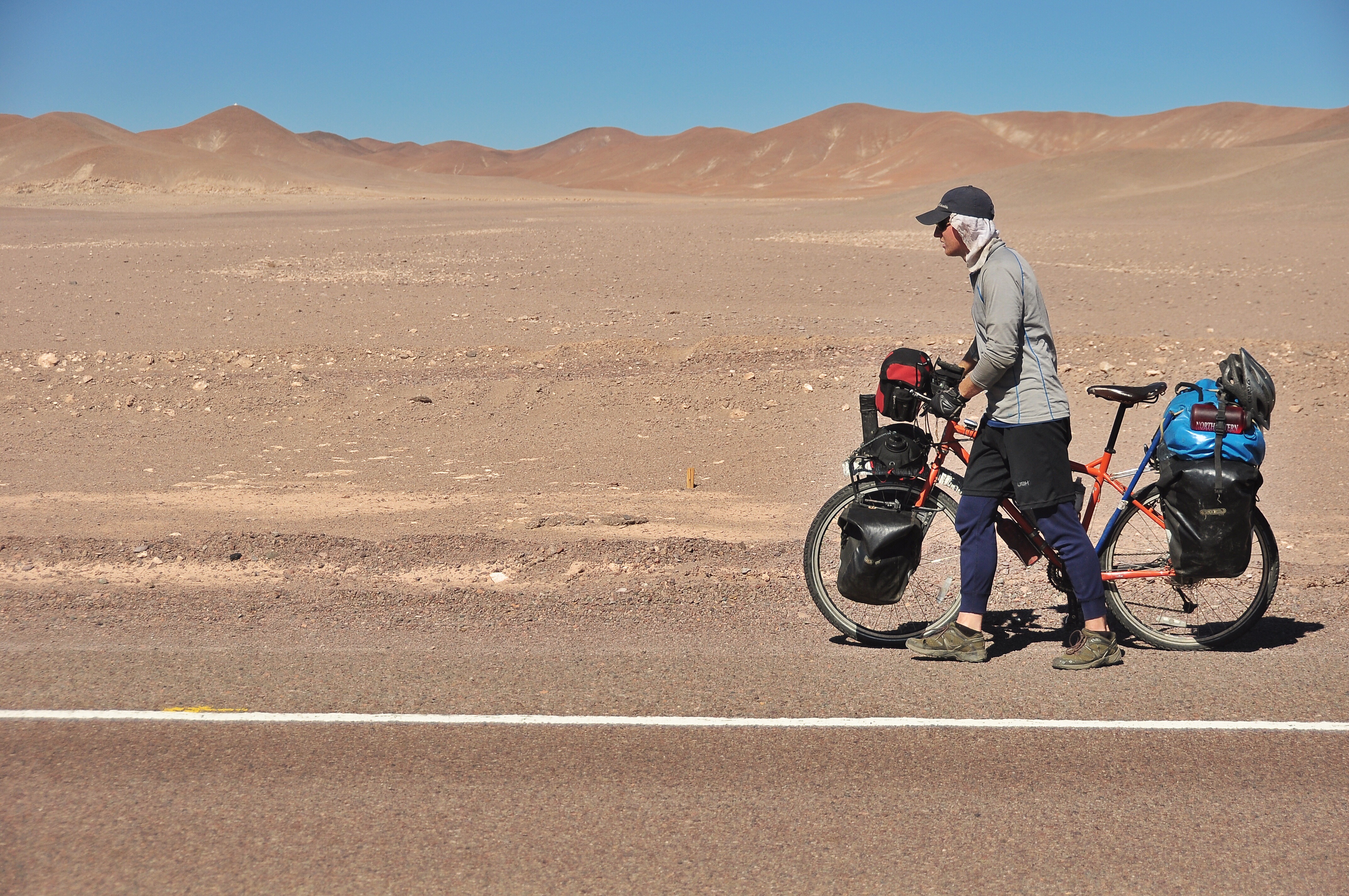
The first Bolivian village we entered into was Quentena, which stands in the middle of nowhere at 4,200m surrounded by mines which make up its main economy. A looming nearby mountain has an old road all the way up to 5,700m (6,000m peak) where the highest mine in the world use to operate, and down in the village, women in the traditional Andean attire – stockings, a pleated skirt, and a colorful vest or shawl – watch us a bit curiously as we slowly cycle into town. Though everyone speaks castillano (Spanish) to us, they speak Quetchwa amongst themselves. We eventually find a small shop which sells crackers, cookies, and some clothes, and after buying a few snacks, we continue past a few dozen more mud brick houses until we are once again all alone in the mountains.
Ghost Towns and Snow: Bolivian Altiplano
The last few days have been rough, sort of a three steps forward, two steps back sort of deal. We had four huge climbs (4,800m- 4,900m each) to do, and in between, there were little ups and downs which made it all the more difficult. The tops of the passes were often steep, and coupled with the poor road conditions, this left us pushing instead of pedaling most of the way up. Once we got to the downhill, instead of feeling excited or relieved, we sort of just felt dread as the road was in such bad condition we hardly ever surpassed 10-15km/h (on a downhill!). Plus, we knew once we got down that we would just have to begin the next climb right away. That being said, it was absolutely beautiful and though it was tough, every calorie burned was more than worth it to be high in the Bolivian mountains.
High Passes and Frozen Water Bottles: Bolivian Altiplano
It’s been windy, and I mean Patagonia style extreme windy, but thankfully, the winds have almost always been in our favor. It’s also been cold, -15C every night, meaning that our water bottles are frozen solid by morning so I have begun sleeping with a few bottles to keep them usable in the morning. After a day of cycling along the traditional lagunas route, where we were passed by jeeps throwing sand our way every few minutes, we turned onto a much less used road (six to eight jeeps a day, all together in one pack) which gave us peaceful cycling up and over multiple 4,700m+ passes. It was hard on the sometimes sandy, always rough road, but it sure was amazing as well! Once again, I’ll let the photos tell the story.
High Altitude Goodness and Secret Hot Springs: Bolivian Altiplano
After stamping into Bolivia we began on what is bound to be one of the highlights of our whole tour: the lagunas route through the Bolivian altiplano. Though I’ve actually already been through the typical lagunas route (on a four day jeep tour three years ago), this time around Kevin and I will be taking a longer and less traveled route, and since this area is completely different and a million times better on the bike, I’m extremely grateful for the opportunity to do it again. For the next 500km we will be pushing our bikes through sandy jeep tracks, sleeping at over 4,000m every night, and enjoying the mountains and funny colored lakes this region has to offer. I’ll be writing along the way (I’m currently writing in our tent next to a gorgeous green lake), and then posting the whole lagunas series (with a new entry preset to publish every few days) once we have wifi. This route really speaks for itself, so I’ll let the photos (and their captions) tell the story. All of these photos were taken within 15km of entering into Bolivia… Just imagine how amazing the next few thousand will be!
2,400m of Steep Agony and the People Who Make it Worth it
*We have just spent the last two weeks along the most amazing route in the Bolivian altiplano, so make sure to check back every few days for blog entries with a whole lot of amazing photos from this stunning expedition-style section. But first, a post about climbing out of Chile.*
After leaving San Pedro and the wonderful Belgian host we had spent the last few days with, we began on a 40km, 2,400m elevation gain climb up and out of Chile and onto the Bolivian altiplano. That sort of ascent is steep by any standards, especially at altitude (4,600m at the top) where it’s harder to breath, but when you are carrying eight days of food, and eleven liters of water (so over 15 kilos each of extra dead weight) it’s hard to even imagine. The most depressing part about a climb like this is looking down only to find that your speedometer reads a grand total of 0km/h, because anything under 4km/h is apparently unworthy of calculation. We cycled (and occasionally pushed) up this darn pass all day wondering why oh why we were on bicycles, until, at four o’clock when Kevin was about to call it a day, a tourist van drove passed us and then back-tracked in order to lavish us with edible gifts and encouragement. The guide jumped out with, “guys, do you want sandwiches? A piece of cake? A cold drink?.. Take whatever you want, we are headed back now and this is all extra,” and so as the tourists inside the van gathered around in order to ask questions about our trip and take pictures with our bike, we feasted on our impromptu snack which couldn’t have been better timed. It wasn’t simply the extra burst of sugar which motivated us on our way again once they took off, but the smiles, the encouragement, and the simple fact that this whole van of tourists was willing to stop for us and cheer us up as we struggled up the pass. Though these forty kilometers weren’t stellar, they could never change our mind about the benefits of cycle touring as a way of travel.
Cycling Through the Atacama: The Driest Desert in the World
The Atacama desert, which happens to be the driest desert in the world, was to be our very first desert cycling experience. To prepare, we bought many three liters bottles and a six liter MSR hydration bladder, so that each of us could carry 11 liters of water on our bikes. Though that seems like a lot when you are carrying the extra eleven kilos up a pass, we now know that it barely lasts us two days. We then set out from Calama right at sunrise (7h30) for a very hot, boring, and different kind of ride. For the first sixty kilometers we steadily but very gradually climbed up to 3,400m (1,200m gain), the highest we have been since Georgia, yet one of the lowest passes we will encounter in the next four or five months, before a beautiful descent down into San Pedro de Atacama.
Eat, Sleep, Cycle: Cycling Through Chile
“Not all those who bicycle are lost.”
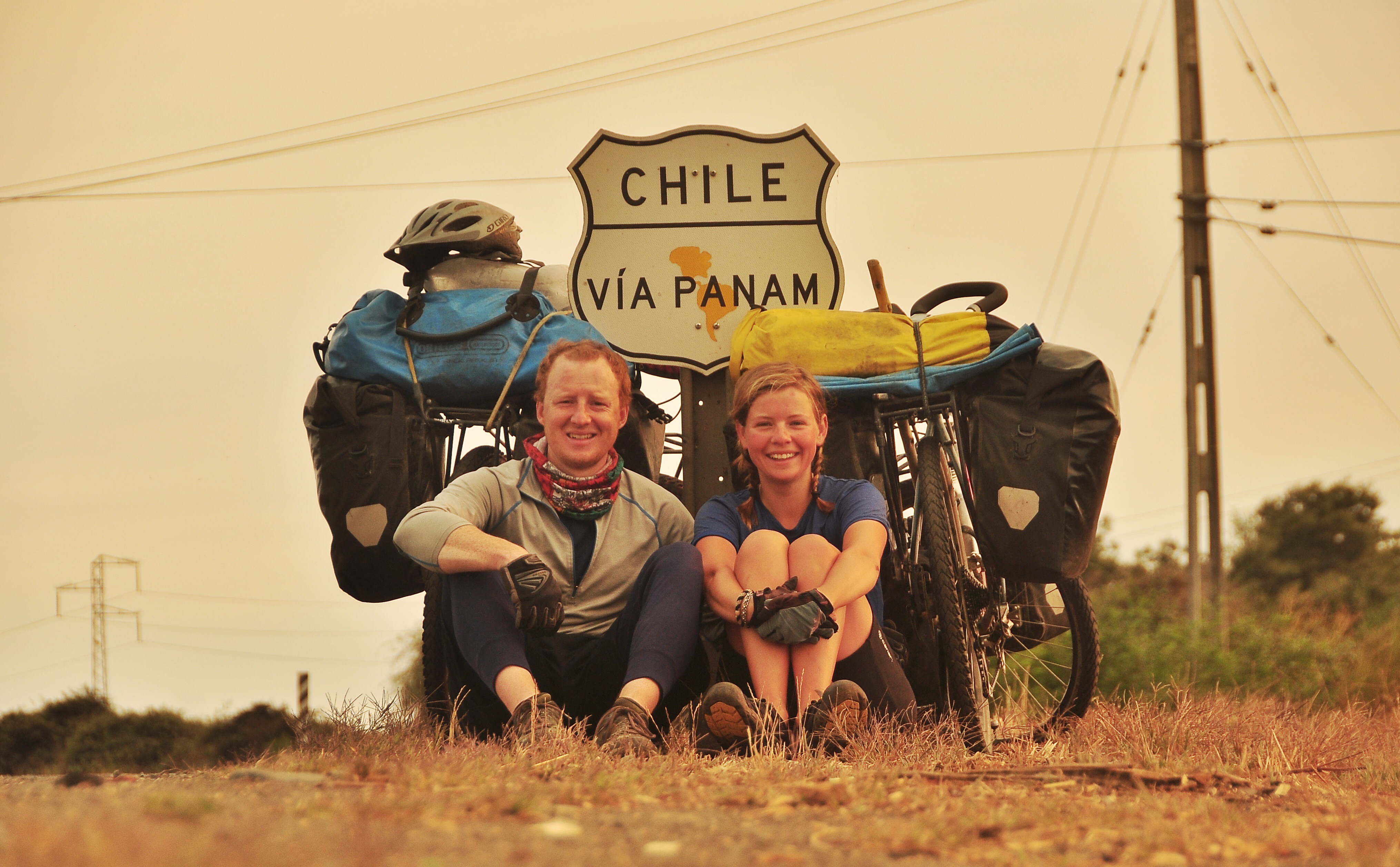
780km in seven days is not what we usually do, but as we ended up on the one and only road going north through Chile – highway five – we really didn’t have anything else to do but cycle. Though the first few days were fine, almost fun as we watched the kilometers fly by on the paved flat road, the last few days were busy and exhausting and reminded us, once again, how much we dislike concrete jungles. It was noisy, dirty, and boring, but we had a large shoulder and were able to cover a lot of ground each day, and though of course this week isn’t going down in our notebooks as a highlight, after nearly two years on the road a little bit of boring really isn’t the end of the world.
Trail Angles: The Hosts Who Keep Us Pedaling
“A child on a farm sees a plane fly overhead and dreams of a far away place. A traveler on that plane sees the farm and dreams of home.”
Over the past few weeks we have had two different wonderful warmshowers experiences, as well as one from couchsurfing, which all deserve to be explained since homestays such as these are what keeps us going. Though these were our first “arranged” homestays (meaning through couchsurfing or warmshowers) we have had many wonderful homestays throughout our trip from strangers who have taken us in. Read about some of our favorites here!
The Bici Clown + 168 Cyclists
“Aerodynamically, the bumble bee shouldn’t be able to fly, but the bumble bee doesn’t know it so it goes on flying anyway.”
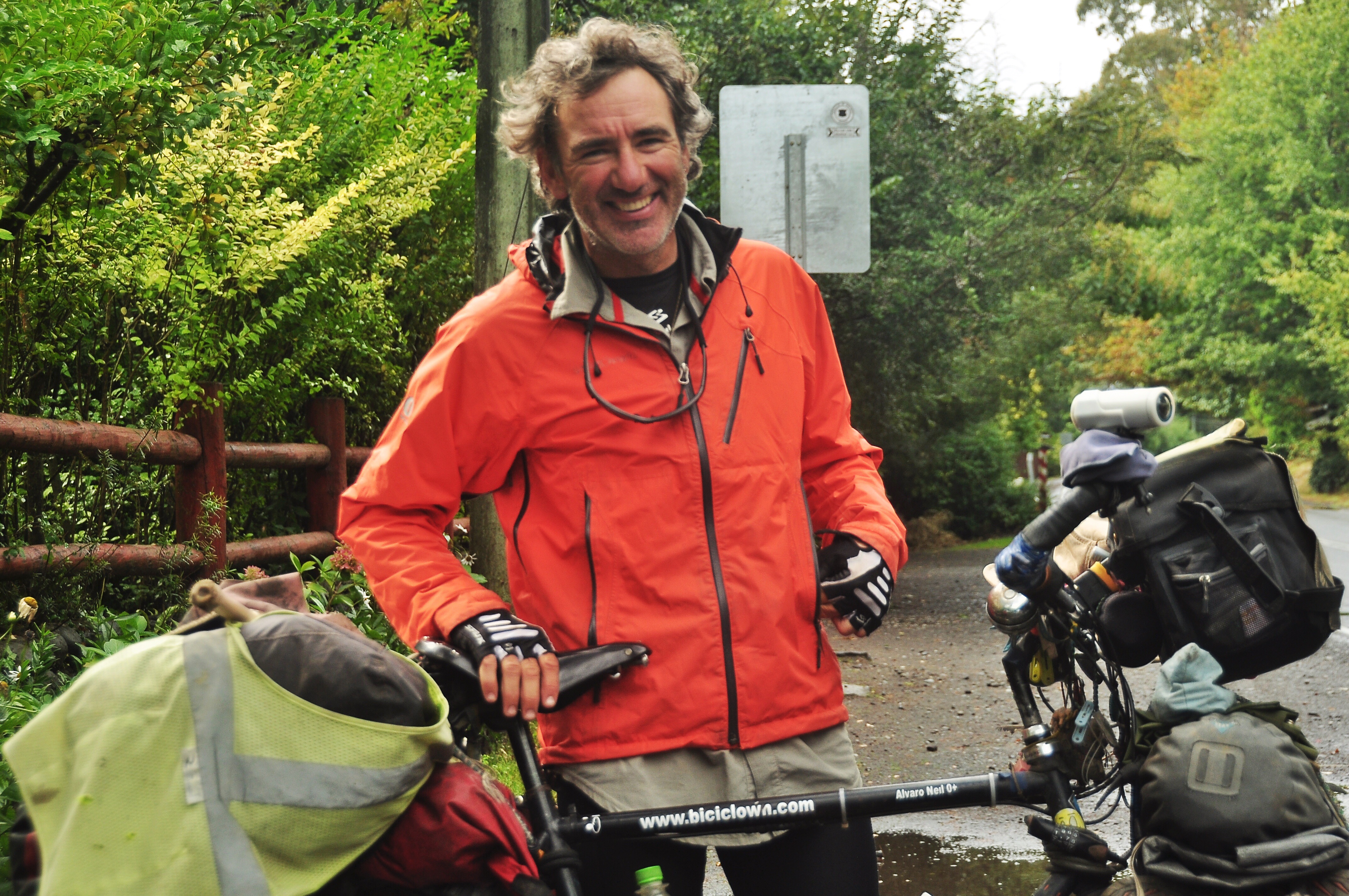
In the middle of a rainy road in Chile we ran into another cyclist, a cyclist who turns out to be the famous “Bici Clown.” Alvero left from Spain eleven years ago and has never gone back; he quit his life as a lawyer in order to become both a cyclist and a clown. So far he has cycled across over eighty countries, and when he feels inspired – like in small rural villages or during disasters such as the tsunami in Japan – he turns into a clown ready to entertain both children and adults alike. He won’t take money for his shows though, instead, he writes books and speaks at events in order to inspire others to shake up their lives a bit, and in order to provide him with the funds to keep pedaling forward. Out of over eighty countries, he mentioned that Iran, Mongolia, and Japan were among his favorites, and had we had more time to speak with him, I’m sure we would have uncovered a treasure trove of experiences and insights from all over the world. He is a friendly, spirited, and personable person, and as we had each previously heard of each other through the large online cyclists network, it was a wonderful surprise to meet in person.
Cycling into Fall: The Lakes Regions of Argentina and Chile
“Today I will do what others won’t, so tomorrow I can accomplish what others can’t.”
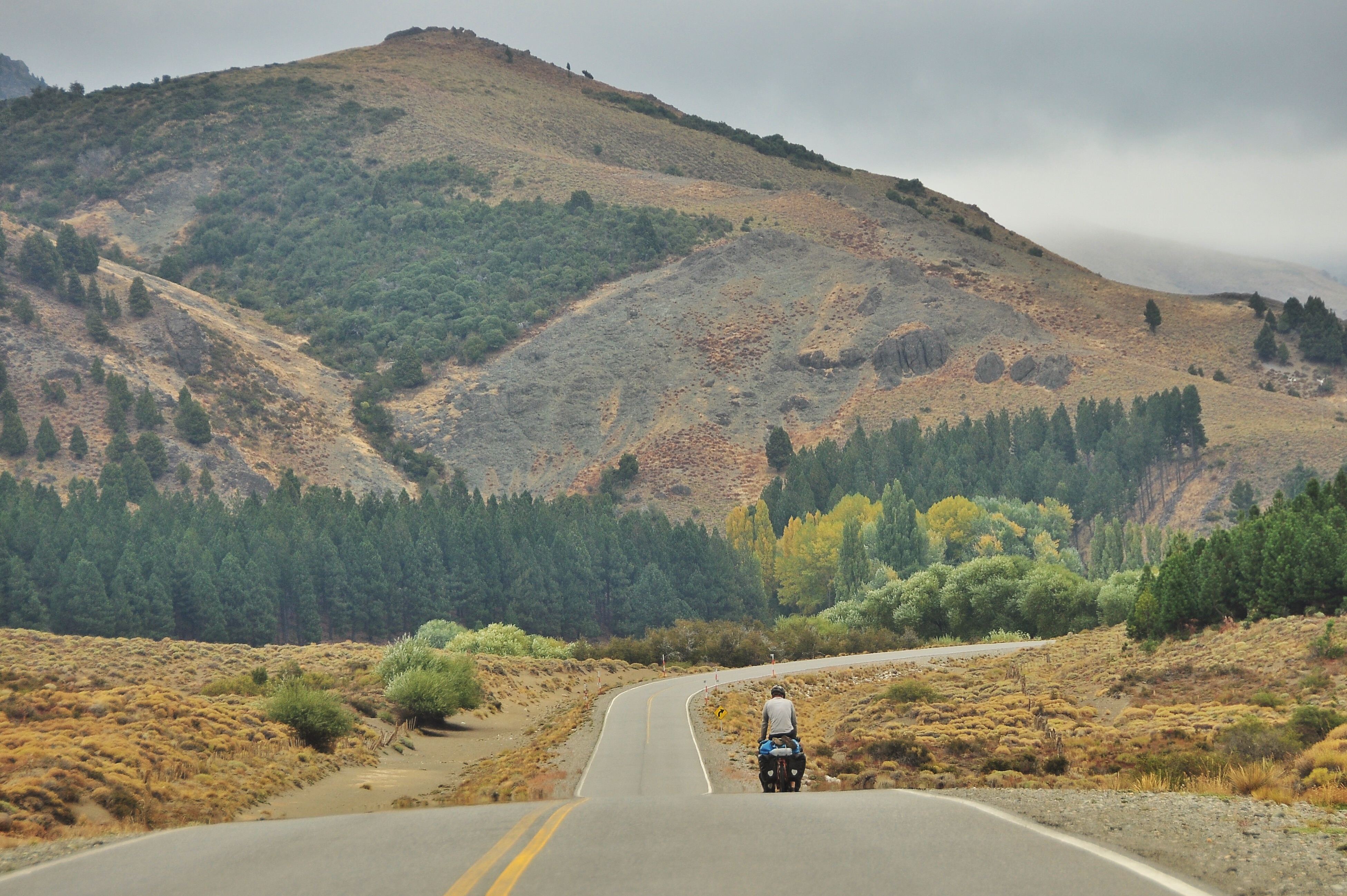
Our last few days in Argentina (don’t worry, we will be back) were wonderful due to the easy camping and non-busy roads of waving and honking happy people, two things which are common in Argentina but very uncommon, as we are now finding out, just next door in Chile. The colors have also started to change this week which made the landscapes beautiful, and I couldn’t be more excited to be cycling through my favorite season twice in one year!